
There is a certain kind of beauty language that is designed to make people exhale before they even understand what they are buying. Organic. Wildcrafted. Skin-loving. Plant-based. Gentle. Clean. Stack enough of those words together and almost anything can start to sound pure. That is the trick.
The problem is that these words often function less like honest descriptions and more like emotional styling. “Organic” becomes a feeling instead of a certification. “Wildcrafted” becomes a romantic haze instead of a documented sourcing practice. “Natural” becomes a blanket thrown over industrial refining, commodity agriculture, mining dust, and factory fillers. By the time you even reach the ingredient list, the story has already been softened for you.
This post is not really about hating individual ingredients for the sake of it. It is about refusing to stop at the label. It is about asking what happens when those beautiful words are followed all the way back to the field, the refinery, the mine, the processing plant, and the factory drum. Because once you do that, some of the “cleanest” products in beauty start to look a lot less innocent.
vitamin e: the soy and solvent story
You know that comforting “vitamin E” line brands love to highlight, usually wrapped in language about “antioxidants” and “skin-loving nutrients”? Behind that feel‑good halo is a supply chain most marketing teams never mention. The vast majority of cosmetic vitamin E — those “natural mixed tocopherols” — are stripped out of mass‑produced vegetable oils, with soybean oil as the primary source in North America. Soy is one of the most heavily genetically modified crops on the planet, so unless a brand is very clear about non‑GMO sourcing, that “clean” serum’s vitamin E is likely riding in on GM soy, processed with industrial solvents like hexane that never make it onto the label.
Even companies who position themselves as gentle and gluten‑free quietly acknowledge that their tocopherol comes from highly refined soy distillates — the proteins are removed, but the GM crop and petrochemical extraction story remains. Once you trace ingredients back to the field and the refinery instead of stopping at the INCI name, “vitamin E” stops looking like a simple good‑for‑you add‑on and starts looking like a marketing veil over GMO agriculture and oil‑industry chemistry.
what i use instead
Instead of leaning on “natural mixed tocopherols” stripped out of GM soy, I use tocotrienols from the annatto plant. Annatto‑derived tocotrienols bring their own antioxidant story without dragging along the usual soy, hexane, and refinery baggage, and they pair beautifully with whole, cold‑pressed plant oils. That gives me a completely different kind of “E”: one that still supports the skin, but comes from a plant and a processing trail I’m actually comfortable naming on the label.
kaolin clay: literally dirty
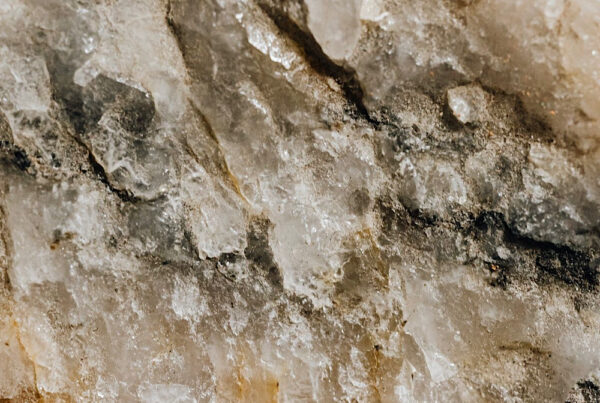
Kaolin clay gets sold to us as “gentle” and “detoxifying,” a kind of white, chalky hug for the pores. Zoom out from the jar, though, and a very different picture appears: kaolin is a mined industrial mineral, pulled out of the ground, then dried, sliced, fired, and pulverized in plants that look a lot more like cement facilities than wellness spaces.
Along that chain, workers are breathing fine kaolin and silica dust at levels high enough to be linked with pneumoconiosis, kaolinosis, and measurable lung‑function changes in mining and processing jobs. Environmental and occupational reports describe kaolin operations with elevated dust loads and “nuisance” particulates that regularly exceed recommended limits, raising ongoing questions about long‑term respiratory hazards for the people who actually make this “pure” ingredient possible. On skin, over‑use can still strip and over‑dry already fragile barriers; upstream, communities and landscapes are absorbing the real cost of all that “gentle” clay while consumers are told it is the safest, cleanest thing you could possibly put on your face.
what i use instead
Avoiding kaolin does not mean rejecting every powder on earth. It means being far more selective about where clays actually come from. Instead of pulling from big industrial kaolin supply chains, I work with what I think of as ancient clays: finely milled diatomaceous earth, and a sacred clay sourced from Crater Lake in Oregon, one of the deepest bodies of water on the continent. Those materials feel more like earth‑based allies than industrial fillers — they give gentle absorbency and texture without plugging my formulas into the exact mining and dust systems I’m questioning here.
vegan waxes: the plant‑based illusion
“Vegan waxes” sound wholesome on a label — carnauba, candelilla, rice bran — as if a leaf simply offered up a silky cosmetic ingredient. But getting a hard, high‑melting‑point plant wax into a smooth, glassy balm or stick is not some magical back‑to‑nature ritual. It is industrial processing.
These waxes are often pushed through heavy refining, strong acids such as sulfuric acid, high heat, and standardizing steps before they ever become the glossy “clean” products sold to consumers. And that should stop people in their tracks: who wants sulfuric acid anywhere in the processing story of a product going on their face, and then pays luxury prices for it?
The romance falls apart again when you follow the supply chain all the way to the ground. Carnauba and candelilla in particular has long been shadowed by reports of exploitative labour, unsafe field conditions, and poverty‑wage harvesting systems in the regions where the plant is sourced. Workers cut, carry, and process in brutal heat so those leaves can eventually be marched through chemistry and turned into “gentle plant‑based wax” in a premium product. By the time that wax lands in a pretty jar, the harshest parts of the story have already been edited out.
There is also a blunt economic reason waxes are everywhere: they are cheap structural fillers. At factory scale they can cost only pennies per ounce, which means they thicken, stabilise, and bulk out formulas while protecting profit margins. That is why words like organic, wildcrafted, and plant‑based can start to feel less like real sourcing information and more like camouflage. Pastoral language gets draped over some of the least expensive backbone ingredients in the batch, and suddenly a wax‑heavy formula becomes a sixty-dollar formula.
what i use instead
I don’t replace beeswax with a different “ethical” wax and call it solved — I don’t use waxes at all. In my own formulas, wax has never been essential to makeup; it has been a cheap, heavy filler that makes products behave more like candles than skincare. It makes textures stickier, duller, more suffocating, and after a few months it loves to punish both maker and wearer: soft balms turning into hard, crumbly cement as the wax phase reacts to climate and humidity swings.
Instead of forcing wax into my work because the industry expects every balm to have it, I build structure from oils, butters, clays, and resins that stay silky, flexible, and breathable over time. I would rather have a balm that melts a little faster and feels alive on the face than a wax brick dressed up as “clean.”
the part my clients played
One of the things I am most protective of in this line is that it didn’t grow out of a lab or a marketing meeting; it grew out of conversations. I didn’t go hunting for the dark side of vitamin E on my own — a client came to me and asked where it was sourced from. I didn’t dig into how kaolin clay is mined and processed until another client said, “please don’t use that on my face,” and told me why.
The best ideas I’ve ever had for these formulas have come from the people wearing them, not from trend reports. My clients are still teaching me every day what needs to be said out loud and what needs to be left out of a jar altogether. If I’m sharing this now, it’s because they asked the hard questions first and I decided to actually listen.
That is also part of “clean” for me: not pretending I always knew better, but letting my community correct me, redirect me, and pull me deeper into the kind of transparency they deserve.
what “clean” doesn’t mean to me
“Clean” doesn’t mean a business model built around shaving costs to the bone and then decorating what’s left with pretty language. When the backbone of a formula is made from some of the cheapest structural ingredients on the commodity market — waxes that cost pennies per ounce at scale, clays pulled from industrial mining streams, anonymous soy distillates sold by the drum — you can’t convincingly tell me the priority was the health of the skin, the land, or the people in the middle. That is a margin strategy, not a purity strategy. Both things can’t be true at the same time: you don’t get to center “clean” as your core value and quietly center cost‑cutting in your raw‑material choices.
what “clean” actually means to me
After seeing behind the label a few times, it becomes hard to hear the word “clean” without asking: clean for who? Removing a few scary‑sounding ingredients and replacing them with prettier language does not make a product honest if the antioxidants still ride in on GM soy, the clays still come from dust‑heavy industrial sites, and the “vegan waxes” still pass through acid‑heavy processing and hidden labour systems. That is not transparency. It is a costume change.
For me, “clean” is not a marketing category. It is a relationship with the supply chain. It means being able to say where the E family came from, where the clay came from, and why there is no wax in the formula at all. It means accepting that texture, glide, and feel might be a little different from what conventional beauty has trained people to expect if that difference allows the story from field, mine, lake, or seed to jar to stay honest.
That is the version of “clean” I want to defend: not spotless, not perfect, but transparent enough that nobody has to squint to figure out what they are really putting on their face.